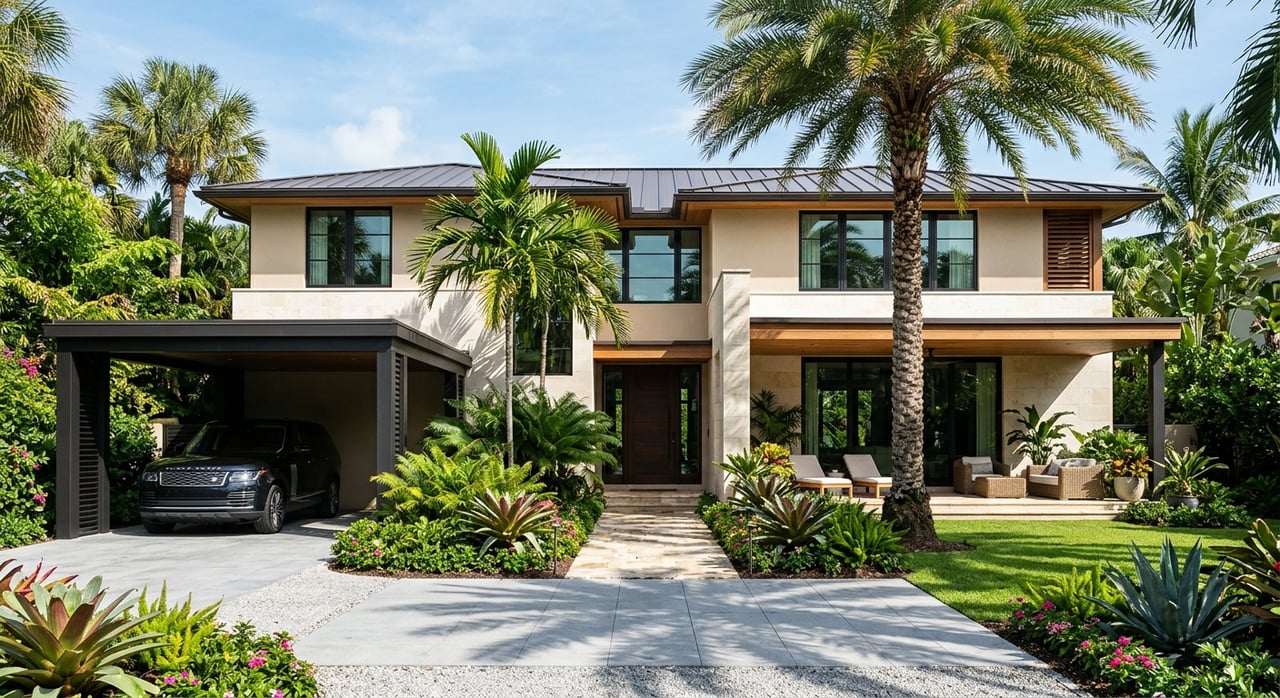
Choosing between Guaynabo and San Juan can feel simple at first, until you realize they offer very different day-to-day experiences. If you are relocating to Puerto Rico, the better fit often comes down to how you want to live, move, and settle in once the boxes are unpacked. This guide will help you compare the two with a clear eye on housing, commute patterns, errands, and lifestyle so you can make a confident move. Let’s dive in.
Guaynabo vs. San Juan at a glance
If you want the short version, Guaynabo generally offers a more residential and suburb-like setting, while San Juan offers a denser and more urban routine. Both are part of the metro area, and both can work well for relocation depending on your priorities.
The biggest difference is not commute time. Census estimates show mean travel time to work is very similar, at 24.5 minutes in Guaynabo and 24.0 minutes in San Juan. In practical terms, your decision is more about lifestyle and housing pattern than the average drive to work.
Population and housing context
San Juan is the larger and denser municipality by a wide margin. It has about 329,737 residents and roughly 7,147.1 people per square mile, compared with about 89,055 residents and 3,254.7 people per square mile in Guaynabo.
That difference shows up in how each place feels. San Juan tends to offer a more compact, neighborhood-specific experience, while Guaynabo reads as more spread out and planned around residential communities and retail corridors.
Housing tenure also helps explain the contrast. Guaynabo has a 72.4% owner-occupied housing rate, while San Juan comes in at 52.8%, which supports Guaynabo’s more ownership-oriented residential profile.
Cost context is also different. Census estimates place Guaynabo’s median owner value at $226,800 and median gross rent at $901, compared with $171,200 and $611 in San Juan.
What daily life feels like in Guaynabo
Guaynabo has a more residential pattern
Planning documents describe Guaynabo’s growth around single-family homes on former agricultural land and later suburban urbanizations. Those sources also note that urbanizaciones make up the majority of housing in the municipality.
Controlled-access communities are also a long-standing part of Guaynabo’s housing pattern. One planning source identified 161 such developments, which helps explain why many relocating households experience Guaynabo as a more structured, neighborhood-based market.
Guaynabo is organized around corridors and communities
Rather than one compact urban core, Guaynabo is shaped by residential areas, major roads, and commercial anchors. The municipality describes itself as an important commerce and industry center with direct access to major roads and highways.
For everyday dining and errands, Avenida Esmeralda stands out as a key destination. The city identifies it as its principal gastronomic center, with more than 30 restaurants along with bars, bakeries, a market square, and nearby commercial uses.
San Patricio Plaza is another recognized anchor in Guaynabo. For many residents, this kind of setup supports a routine built around neighborhood living and planned errand runs rather than a fully walkable urban pattern.
Guaynabo supports a quieter home-base routine
Guaynabo also offers local recreation and municipal support services that can matter during a move. The city highlights La Marquesa Forest Park as a recreation option, and it says it operates seven Centers of Multiple Services that provide support such as emergency food, basic necessities, school assistance, and help with utilities.
For many relocating households, that creates a sense of a municipality built around residential stability and convenience. If you want a home base that feels more removed from the intensity of a dense city center, Guaynabo may align well with that goal.
What daily life feels like in San Juan
San Juan is denser and more neighborhood-driven
San Juan is Puerto Rico’s capital and a much more compact urban environment. Planning materials describe it as part of the metro zone with 18 official barrios and about 48 square miles of territory.
For relocation, what matters most is that San Juan does not feel the same from one area to the next. Your experience can shift meaningfully depending on the district, which is one reason many movers compare neighborhoods just as closely as they compare municipalities.
San Juan offers distinct urban lifestyles
Several San Juan districts support very different routines. Discover Puerto Rico describes Condado as centrally located with strong access to lodging and amenities, Miramar as lively and highly walkable with a mix of restaurants and residential communities, Santurce as known for art and festival energy, and Old San Juan as a historic district with cobblestone streets and colonial character.
That variety is part of San Juan’s appeal. If you want your relocation choice to reflect a specific urban rhythm, whether that means beach-adjacent living, access to offices, cultural activity, or a more historic setting, San Juan gives you more clearly differentiated options.
San Juan centralizes shopping and public services
San Juan also concentrates a wide range of services. Plaza Las Américas is identified as the largest shopping center in the Caribbean, with more than 50 restaurants or food establishments and 15 movie theaters.
Integrated government service locations in Minillas and Viejo San Juan also house multiple agencies and public functions. For some households, that level of service concentration can make the first months after a move feel more efficient.
Comparing commute and mobility
Guaynabo favors a highway-first routine
Guaynabo’s economic development materials emphasize direct access to major roads and highways. The city also notes that it is only minutes from San Juan and Luis Muñoz Marín International Airport.
Local collective-transit routes serve areas such as Esmeralda, Torrimar, and Amelia. ATI materials also identify Torrimar and Martínez Nadal as Tren Urbano stations in Guaynabo, but the overall pattern still points to a commute style that often leans more heavily on driving.
San Juan offers more mixed-mode mobility
San Juan sits at the center of the metro transit network. ATI says the Tren Urbano has 16 stations across San Juan, Guaynabo, and Bayamón, operates daily from 5:30 a.m. to 11:30 p.m., and connects to centers for education, government, hospitals, and recreation.
ATI also says the bus network includes 32 routes serving San Juan, Guaynabo, and other metro municipalities, with airport connections noted through Route 40. For many households, that means transit, walking, and shorter neighborhood trips are more realistic parts of daily life in San Juan than in a more suburban setting.
Which location may fit your move better
Guaynabo may fit you if you want
- A more residential and suburb-like setting
- A market with a higher share of owner-occupied homes
- Neighborhoods shaped by urbanizaciones and controlled-access communities
- Direct highway access for regular metro-area travel
- Retail and dining concentrated along established corridors
San Juan may fit you if you want
- A denser urban environment
- More neighborhood-to-neighborhood variety
- Greater access to transit and walkable districts
- A broader concentration of shopping, culture, and public services
- A routine shaped by mixed-use urban living
A practical note for renters and second-home households
If you are relocating for a long stay, management quality matters in either municipality. A well-managed residence can make move-in, maintenance, communication, and service coordination much smoother, especially when you are learning a new area and trying to settle quickly.
This matters whether you prefer Guaynabo’s more residential structure or San Juan’s more urban pace. In both places, professionally managed homes can reduce friction and help your relocation feel more predictable from day one.
Final thoughts on Guaynabo and San Juan
When you compare Guaynabo and San Juan for relocations, the choice is usually less about distance and more about rhythm. Guaynabo tends to suit households looking for a planned, residential home base with strong road access, while San Juan tends to suit those who want a denser, more neighborhood-driven urban experience.
If you are weighing a managed rental, a longer seasonal stay, or the operational realities of owning a residence in either market, the right support can make the transition much easier. To explore professionally managed Puerto Rico residences or tailored property care support, connect with Loggia Property Services.
FAQs
How does Guaynabo compare with San Juan for daily lifestyle?
- Guaynabo generally offers a more residential, suburb-like routine, while San Juan offers a denser, more urban lifestyle shaped by distinct neighborhoods, transit options, and centralized services.
Is Guaynabo or San Juan better for commuting in Puerto Rico?
- Average commute times are very close, with Census estimates at 24.5 minutes in Guaynabo and 24.0 minutes in San Juan, so the bigger difference is whether you prefer a highway-first routine or more mixed-mode mobility.
Are housing costs higher in Guaynabo or San Juan?
- Census estimates show higher housing cost context in Guaynabo, with a median owner value of $226,800 and median gross rent of $901, compared with $171,200 and $611 in San Juan.
What type of housing is common in Guaynabo for relocations?
- Planning sources describe Guaynabo as shaped by single-family homes, suburban urbanizaciones, and many controlled-access communities, which supports a more residential housing pattern.
What makes San Juan appealing for relocation within Puerto Rico?
- San Juan offers neighborhood variety, broader transit access, major shopping and service hubs, and urban districts with different day-to-day experiences, from historic areas to compact mixed-use neighborhoods.